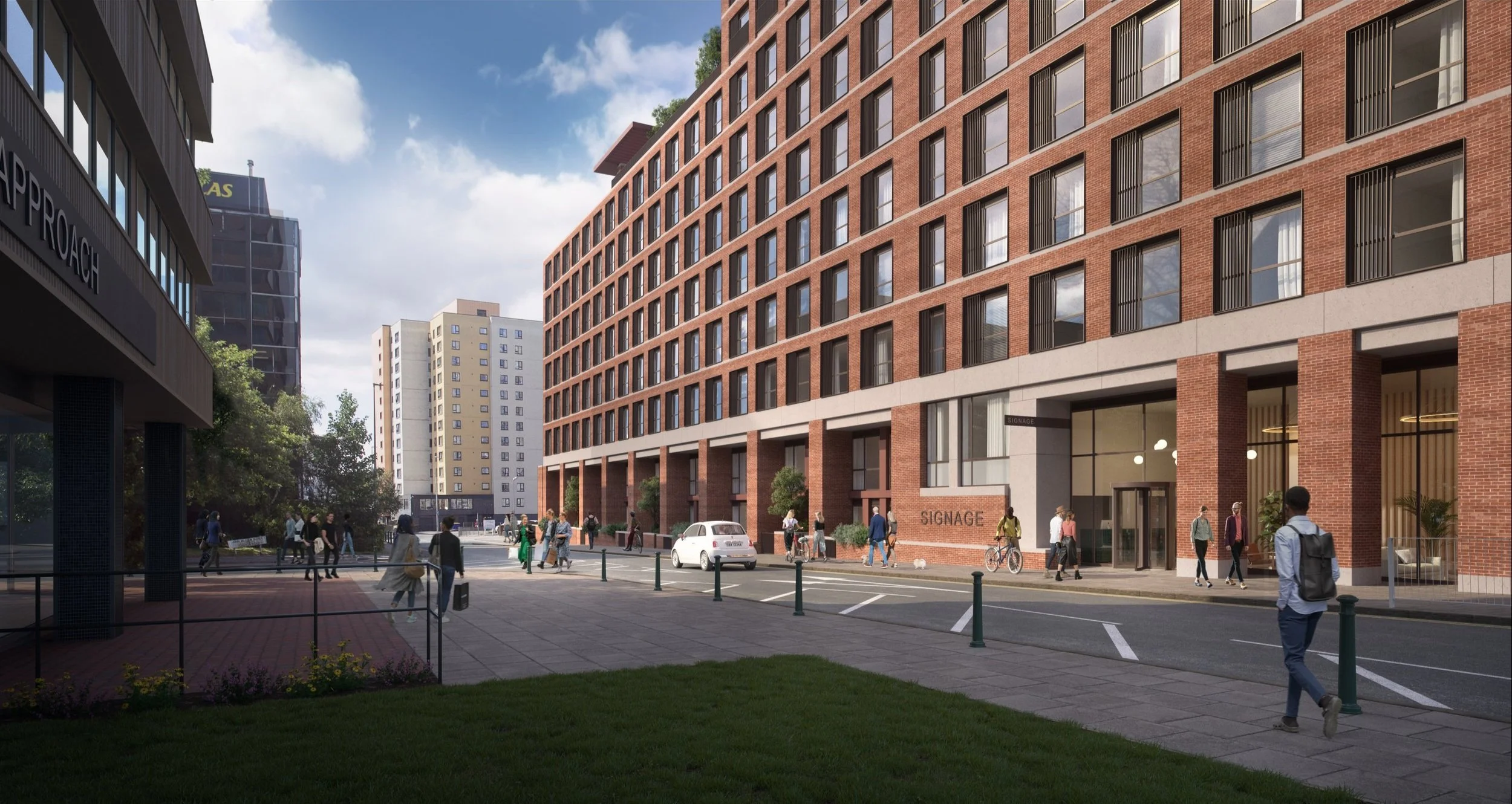
Albert Street, Eccles, Salford
Silverlane Developments
2022-2023
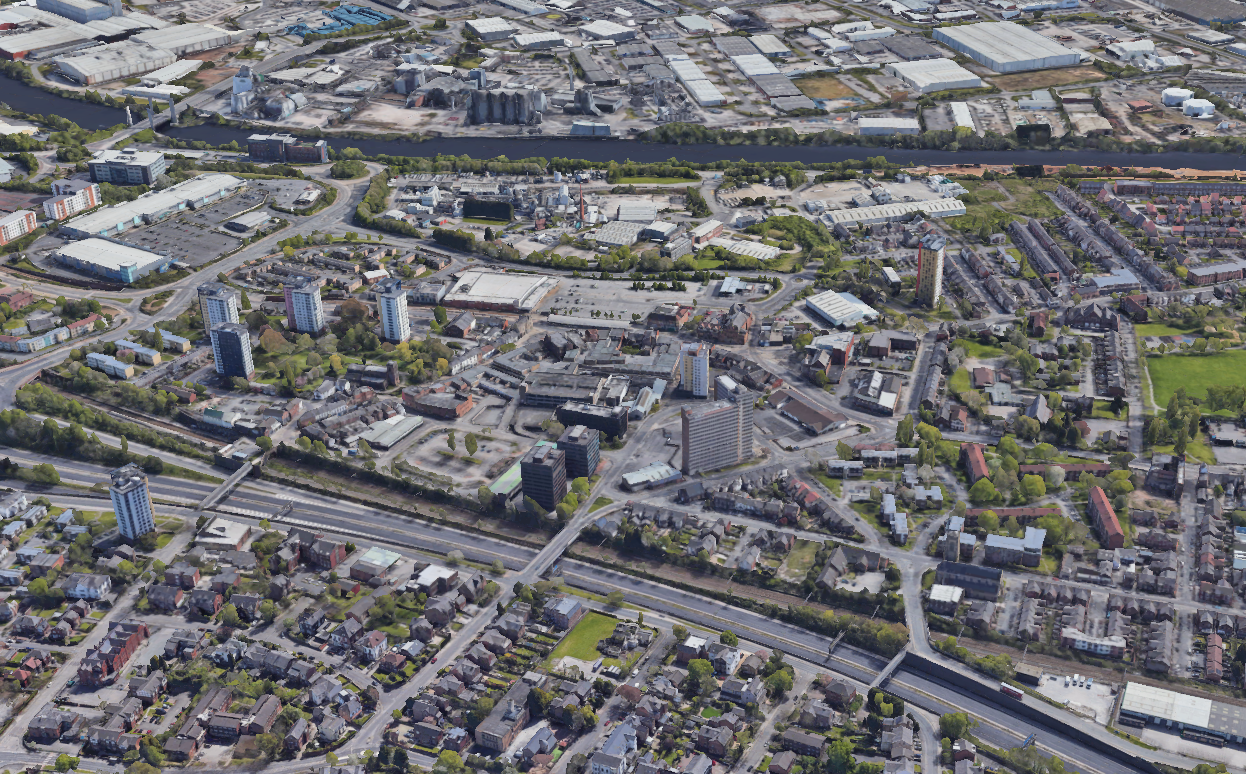
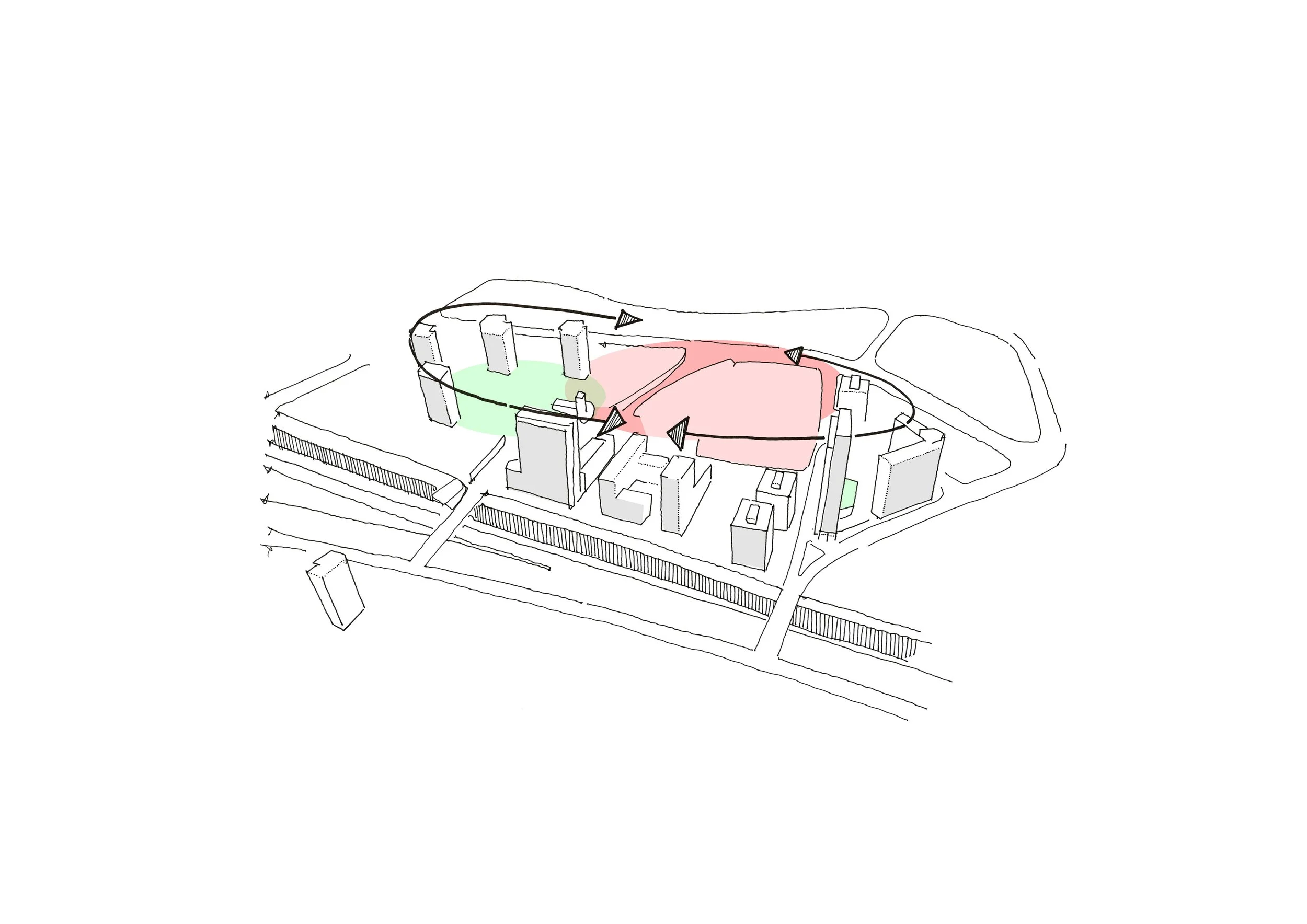
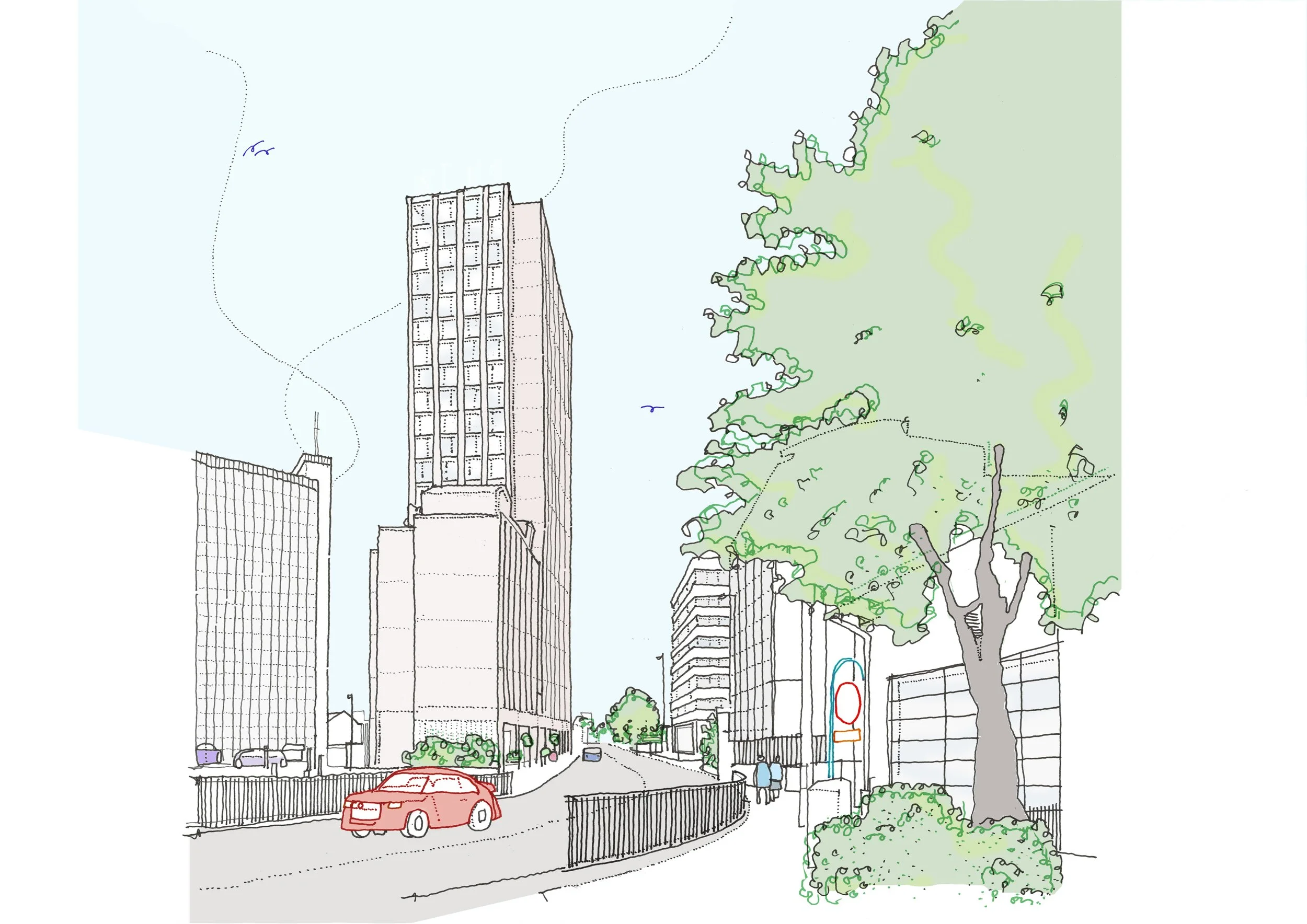
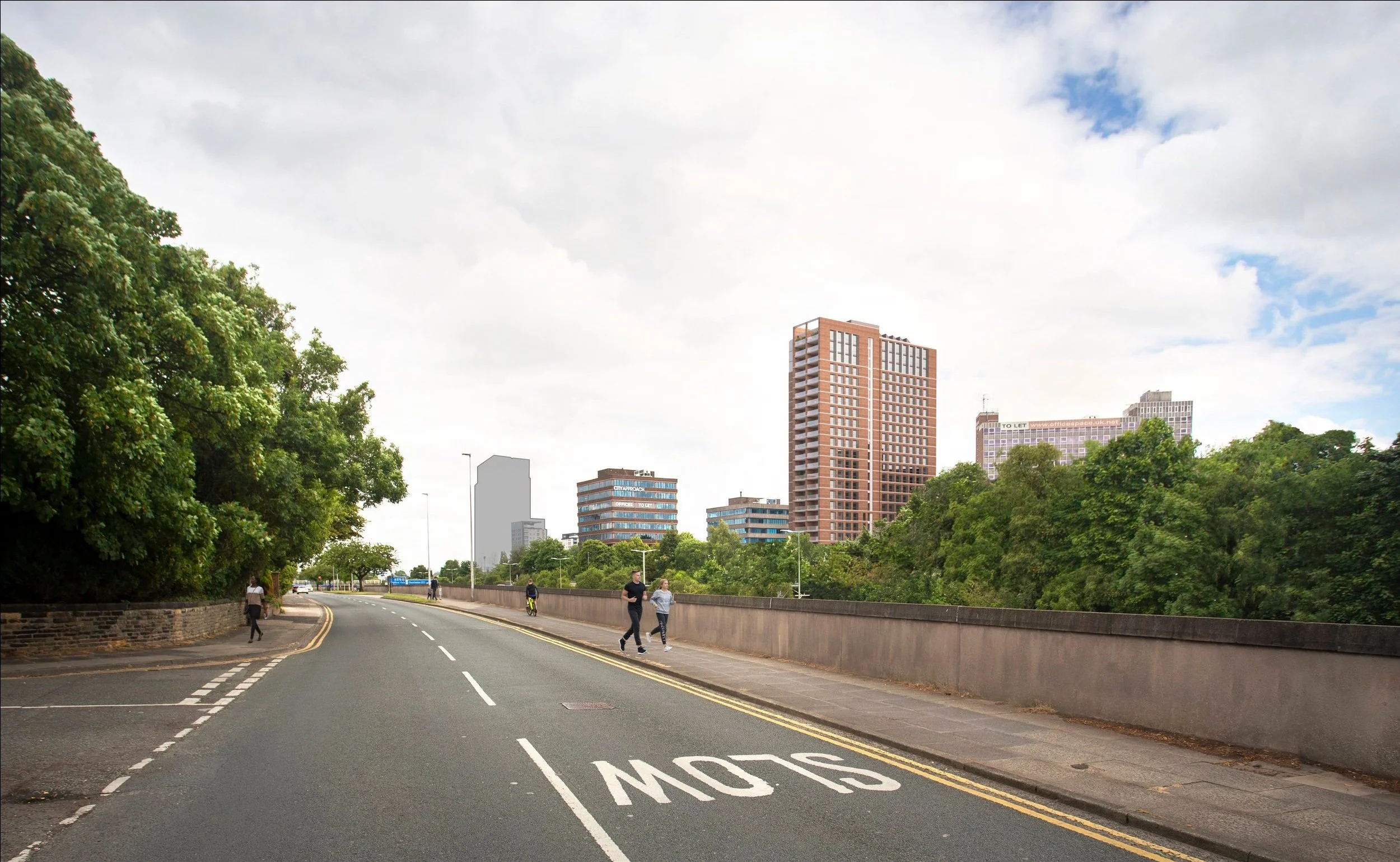
The development site is the former Vauxhall motor vehicle dealership, located on the north eastern edge of Eccles town centre addressing Albert Street to the immediate north, Albert Street to the east and the south and Peel Street to the west. Further north, Albert Street becomes a bridge over the M602 motorway;
The site contains a two storey building on the north west frontage and a surface car park on the south east frontage. To the north of the site is the M602 motorway connecting Manchester and Liverpool; running parallel with the motorway is the rail link that connects Manchester and Liverpool.
The development involves the demolition of an existing property and the erection of a multi storey building comprising of 256 no. one, two and three-bedroom apartments and three-bedroom townhouses along with resident’s amenity space and rooftop gardens. There is no commercial or public access space in this building.
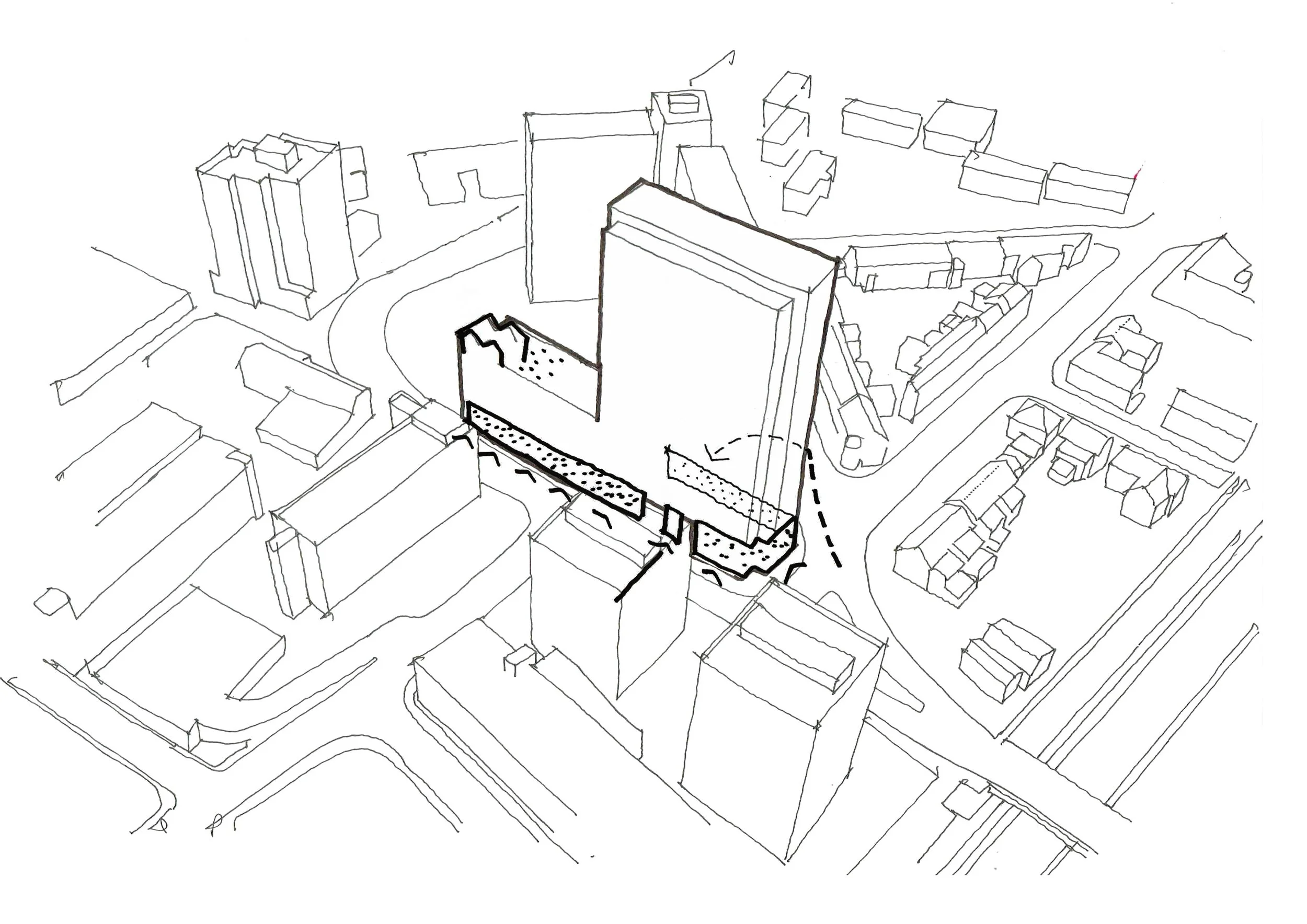
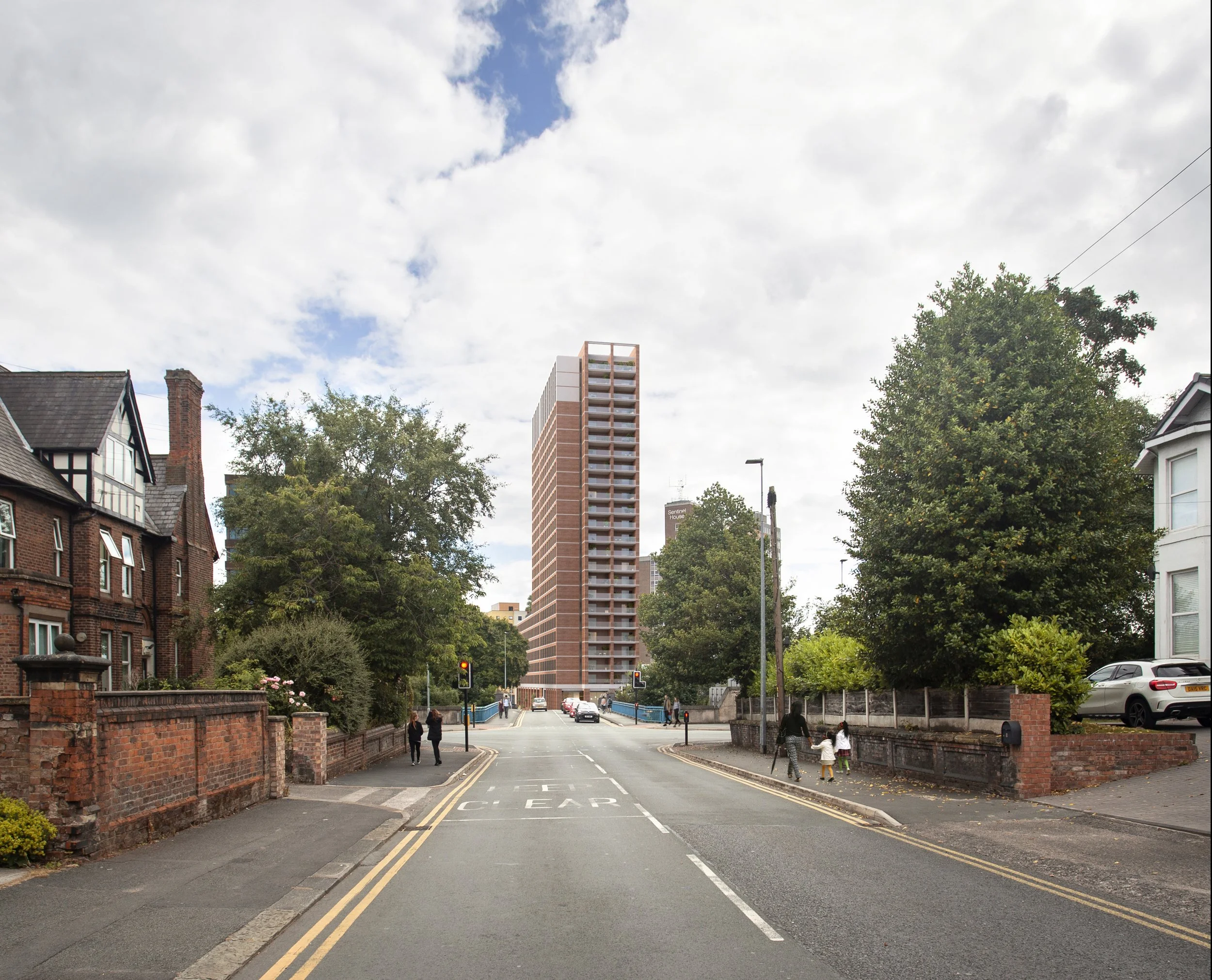
The accommodation takes the form of a ground plus seven-storey podium and a tower of ground plus 24 residential storeys. The tower element is sighted at the northern end of the site. The overall building mass runs parallel to Albert Street. The podium contains residential entrance spaces, townhouses, plant, car parking, refuse and bike stores and residential accommodation. The podium roof contains residential amenity space. The tower element contains a residential space bookended by a balcony residential space.
The building evolved as a simple stepped linear podium and tower form. A “street scale” linear volume, oriented north to south addresses Albert Street and forms the podium base with an enclosed courtyard oriented west addresses Peel Street. The tower element that sits on the podium establishes a clear typological relationship with the podium and the street.
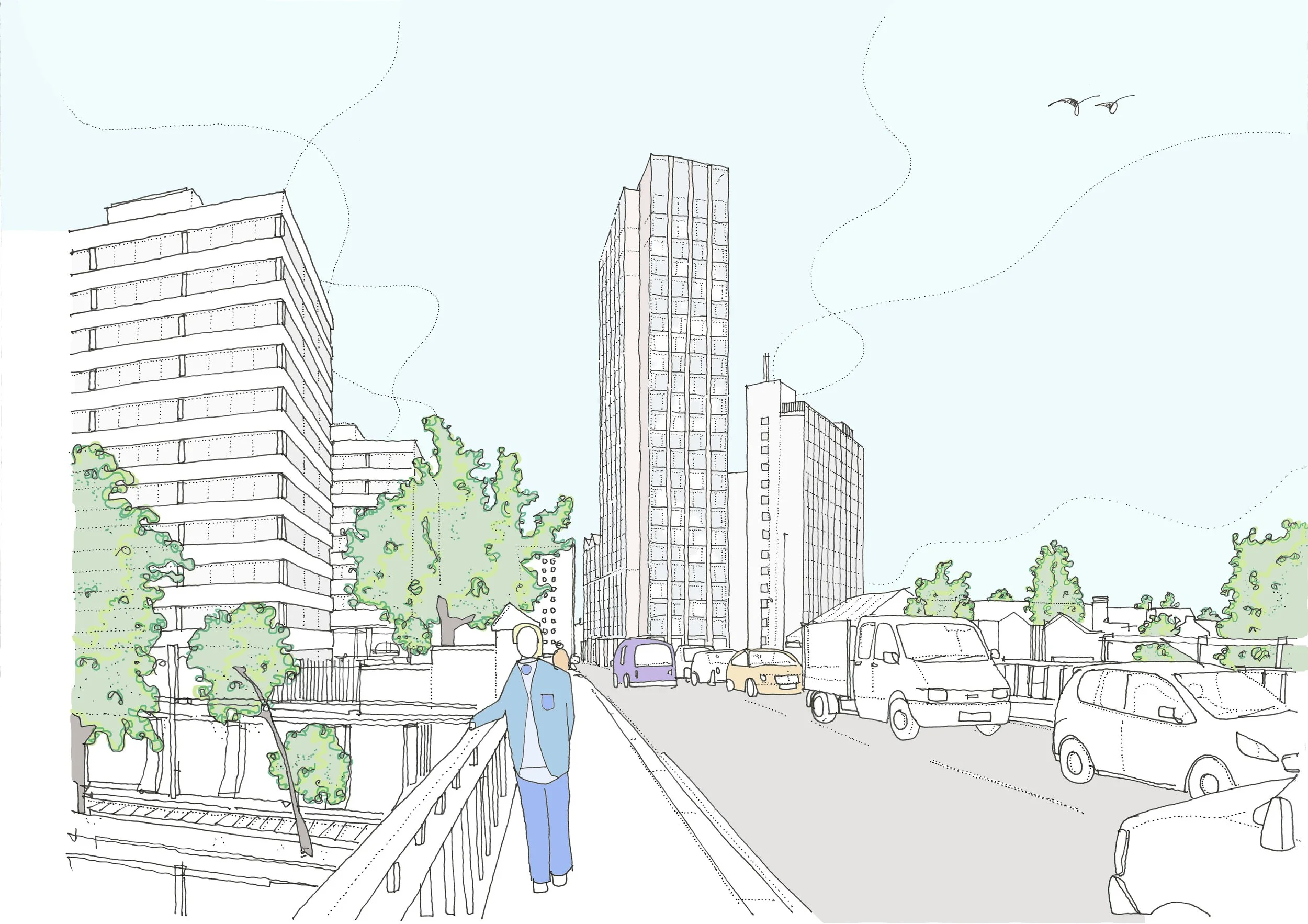
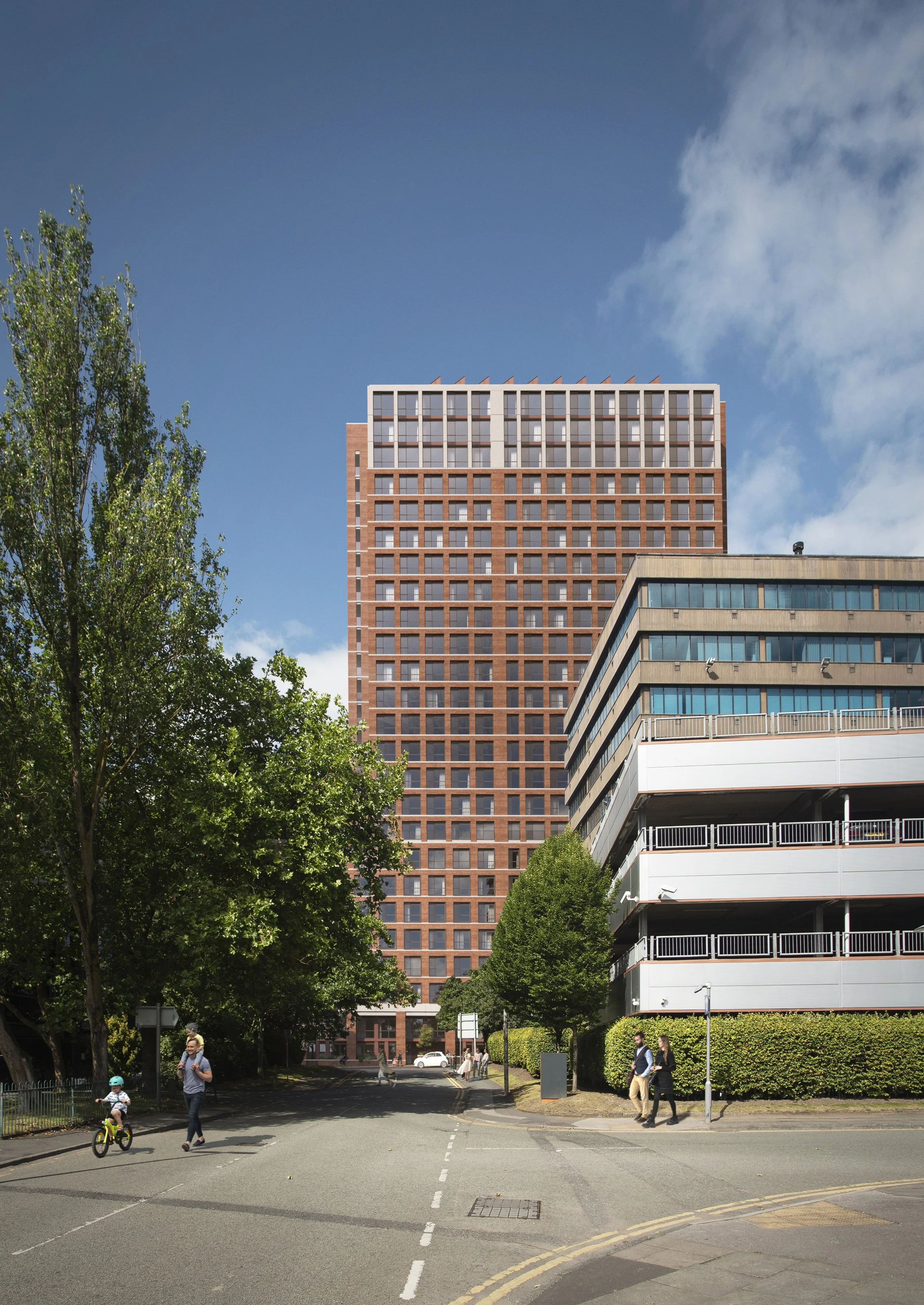
By drawing on the warehouse typology, interpreted into a modern architectural language; the new building through its scale, facade layering and detailing will contribute positively to the local streetscape and the wider context. An external language of brick, masonry and metalwork with deep set window reveals reflects a more robust, almost ‘converted industrial’ aesthetic.
The typical facade expression is a regular grid of brick piers, stone-like coursing at floor levels and deeply recessed aluminium windows and louvres. The regularity of the facade is softened by subtle differentiation in expression that breaks down the facades into a series of pleasing proportions. The building has a defined base, middle and a concluded top.
The ground and first floor are defined by a colonnade with expressed piers, between which a range of uses are reflected by differing facade treatments, margins and details. The regularity of the brick grid pervades the elevations. The podium is defined by marginally wider piers and the introduction of pressed metal collars within the deep-set window reveals. The tower is defined by marginally narrower piers with deep-set brick reveals omitting the metal collars.
The top three floors of the tower are expressed as a ‘crown’, where the material forming the piers changes from masonry brickwork to pre-cast stone-like material that reflects the materials used as stings courses and margins throughout the elevation and assist in reducing the scale of the tower. The piers to the crown are narrower still than the brickwork piers below.