Church Street, Eccles, Salford
Silverlane Developments
2018-2023
This development site is located on the northern edge of the town centre adjacent Eccles railway station and is bounded by the pedestrianised Church Street to the east, Vicarage Grove to the north, Birkdale Grove to the west and John William Street to the south.
To the north of the site is the M602 motorway connecting Manchester and Liverpool; running side by side with the motorway is the rail link that connects Manchester and Liverpool.
To the east and across Church Street are a series of retail units which continue south along Church Street to the town centre itself with the Metrolink LRT Station a short walk away.
To the southeast of the site, across John William Street, are the rear of retail units that front Church Street.
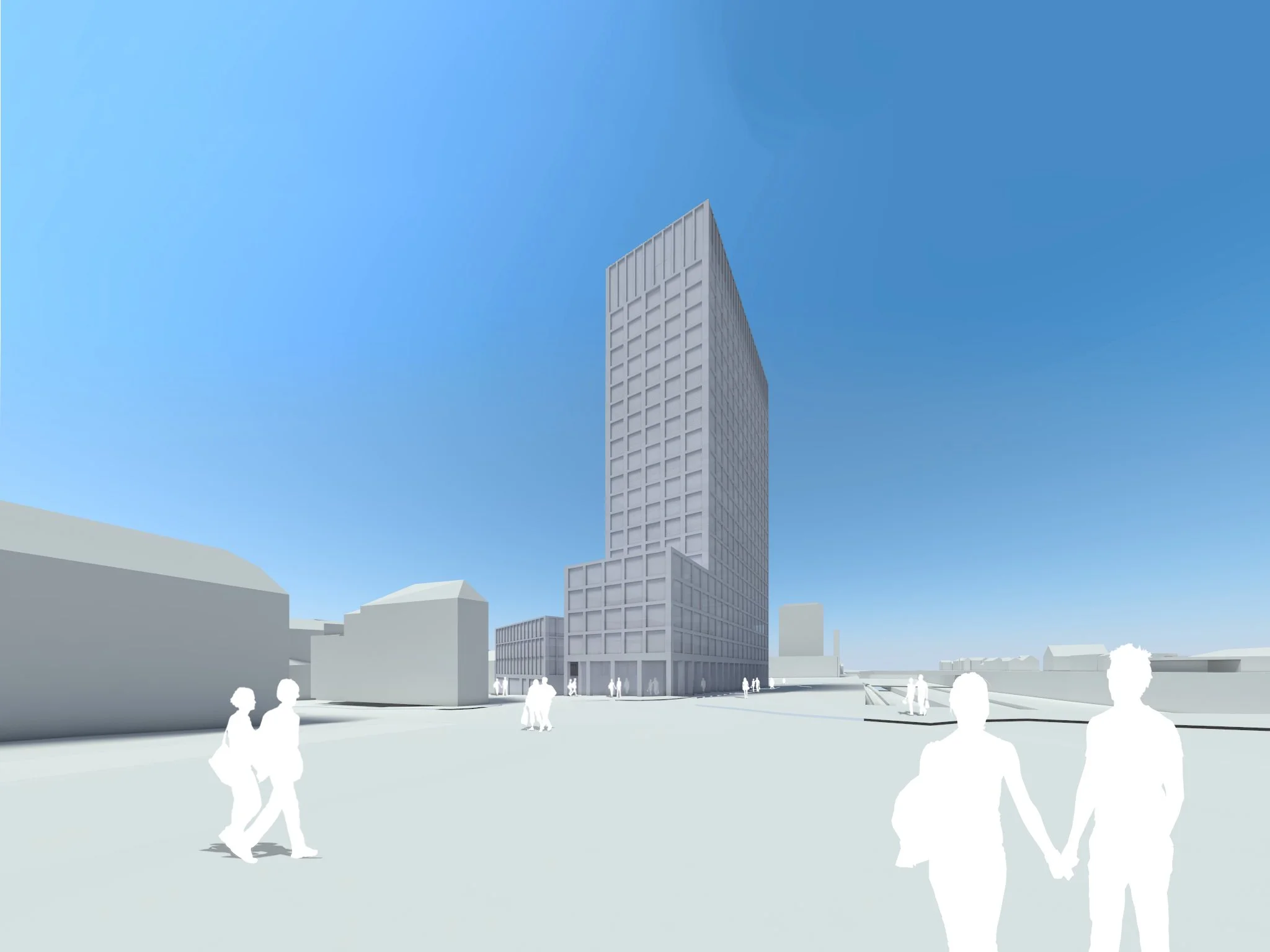
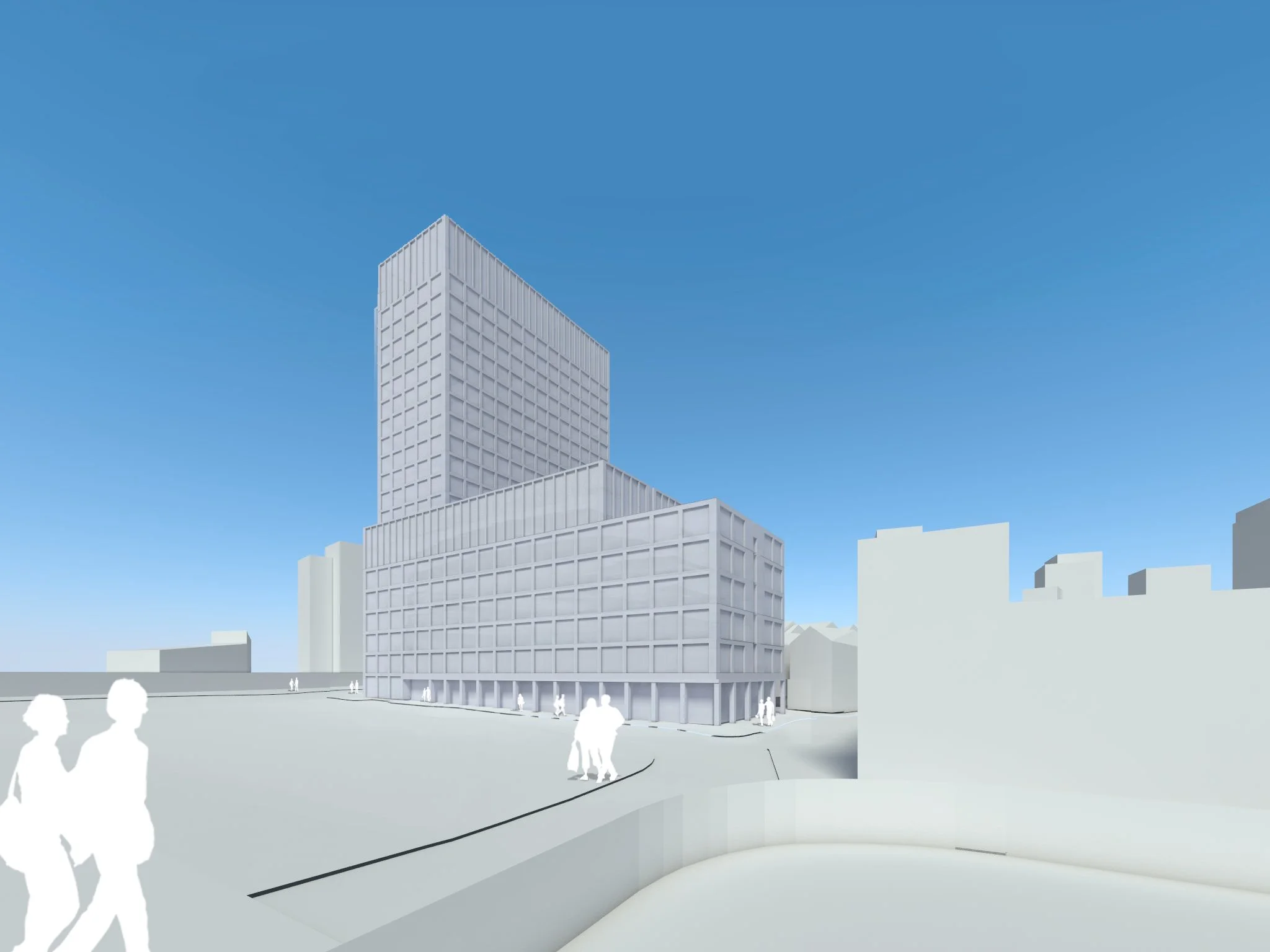
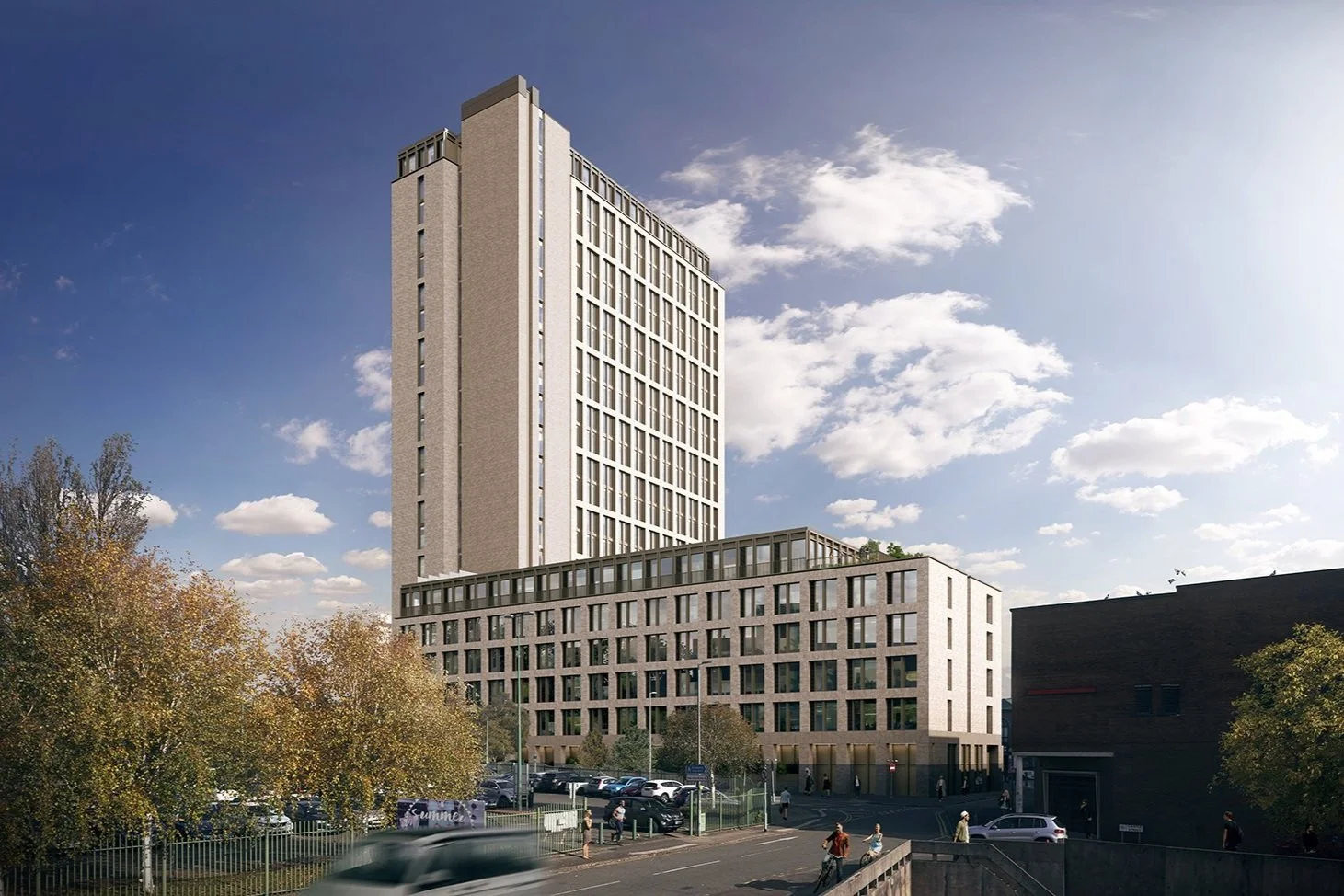
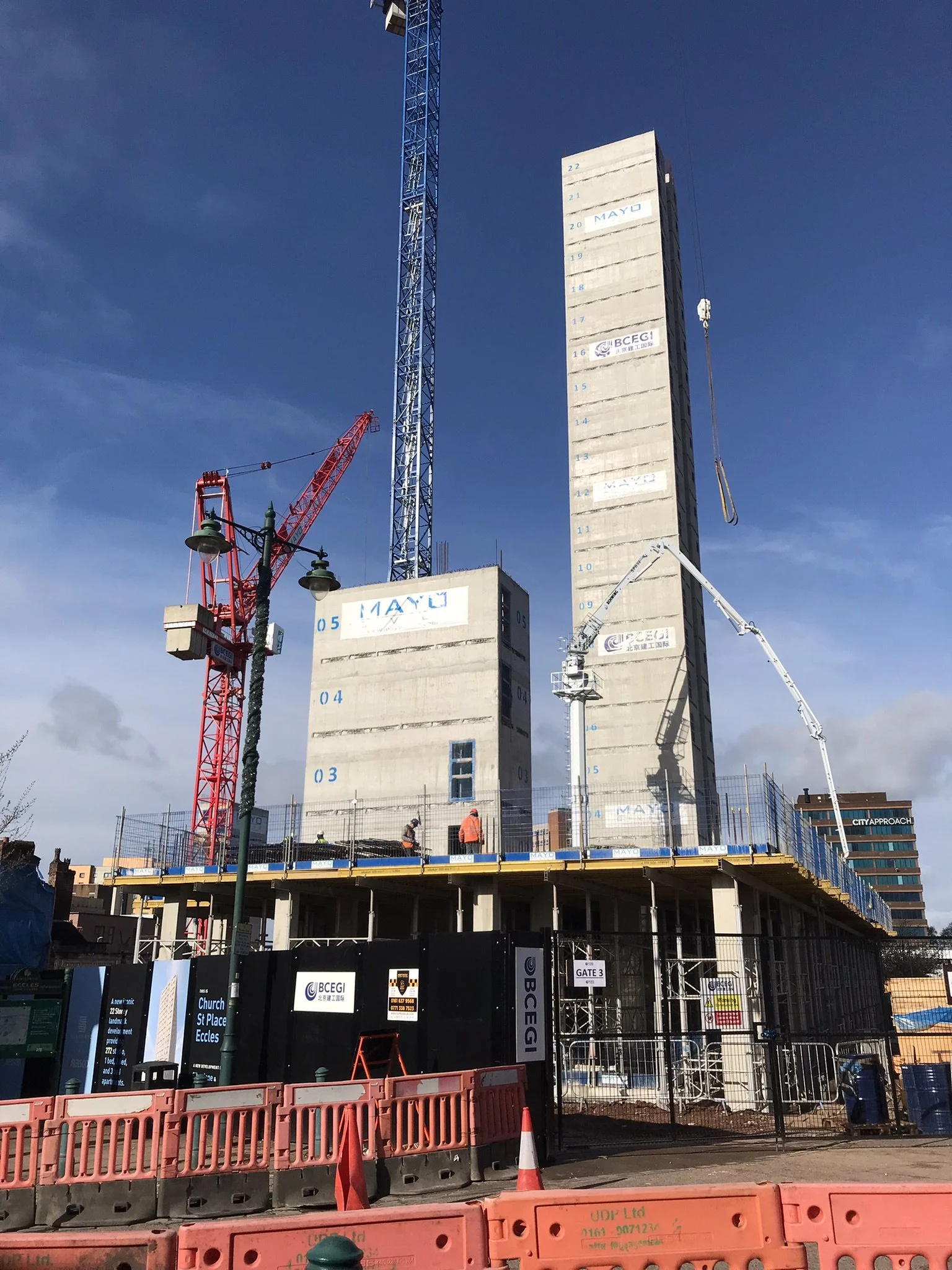
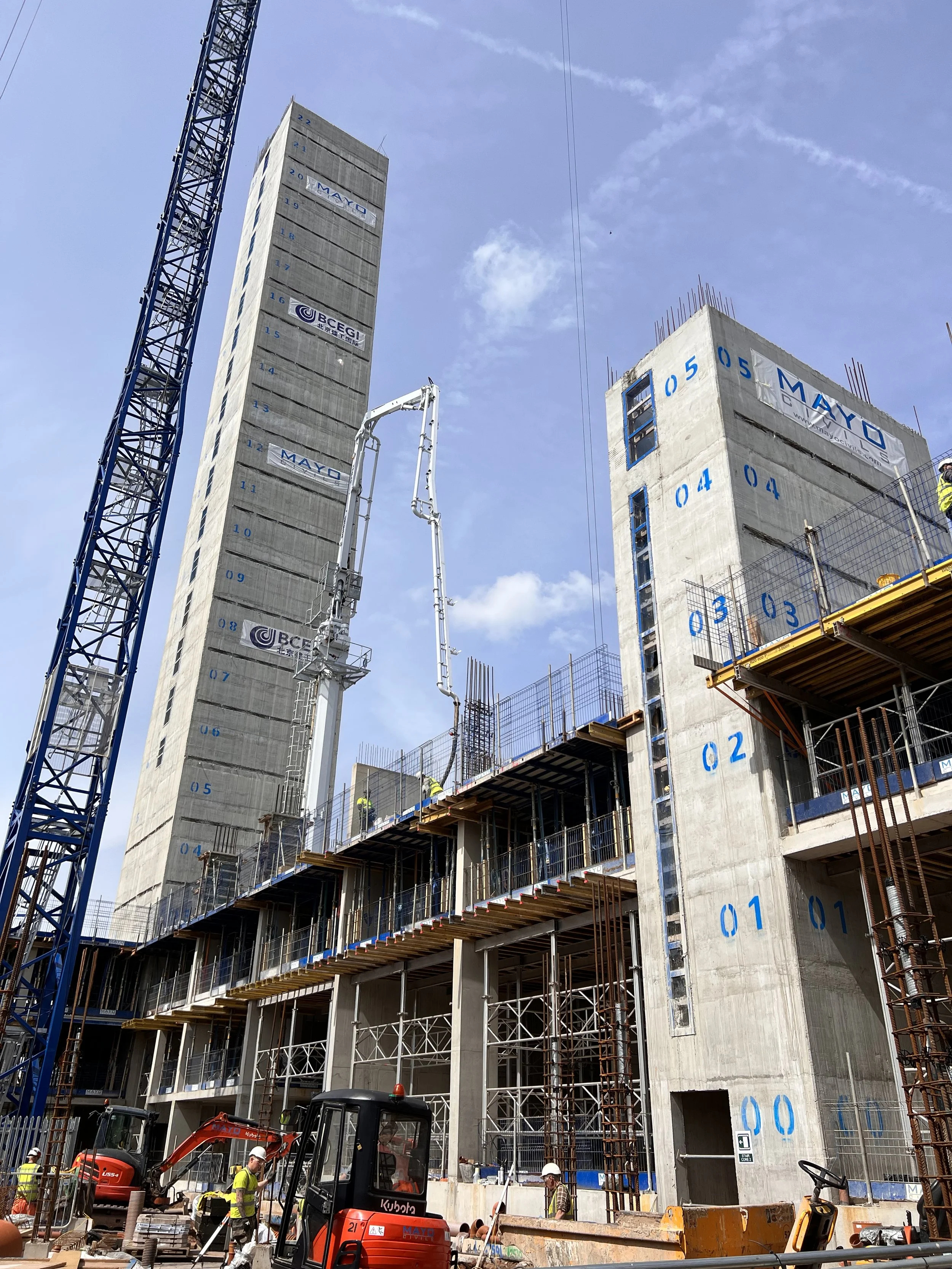
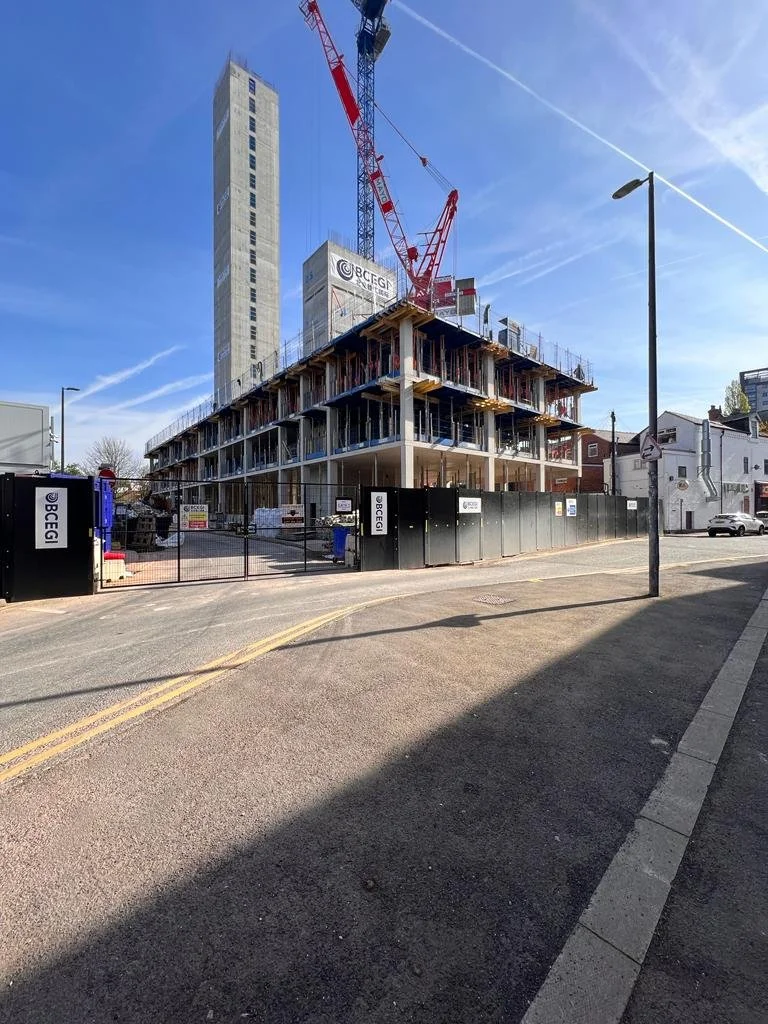
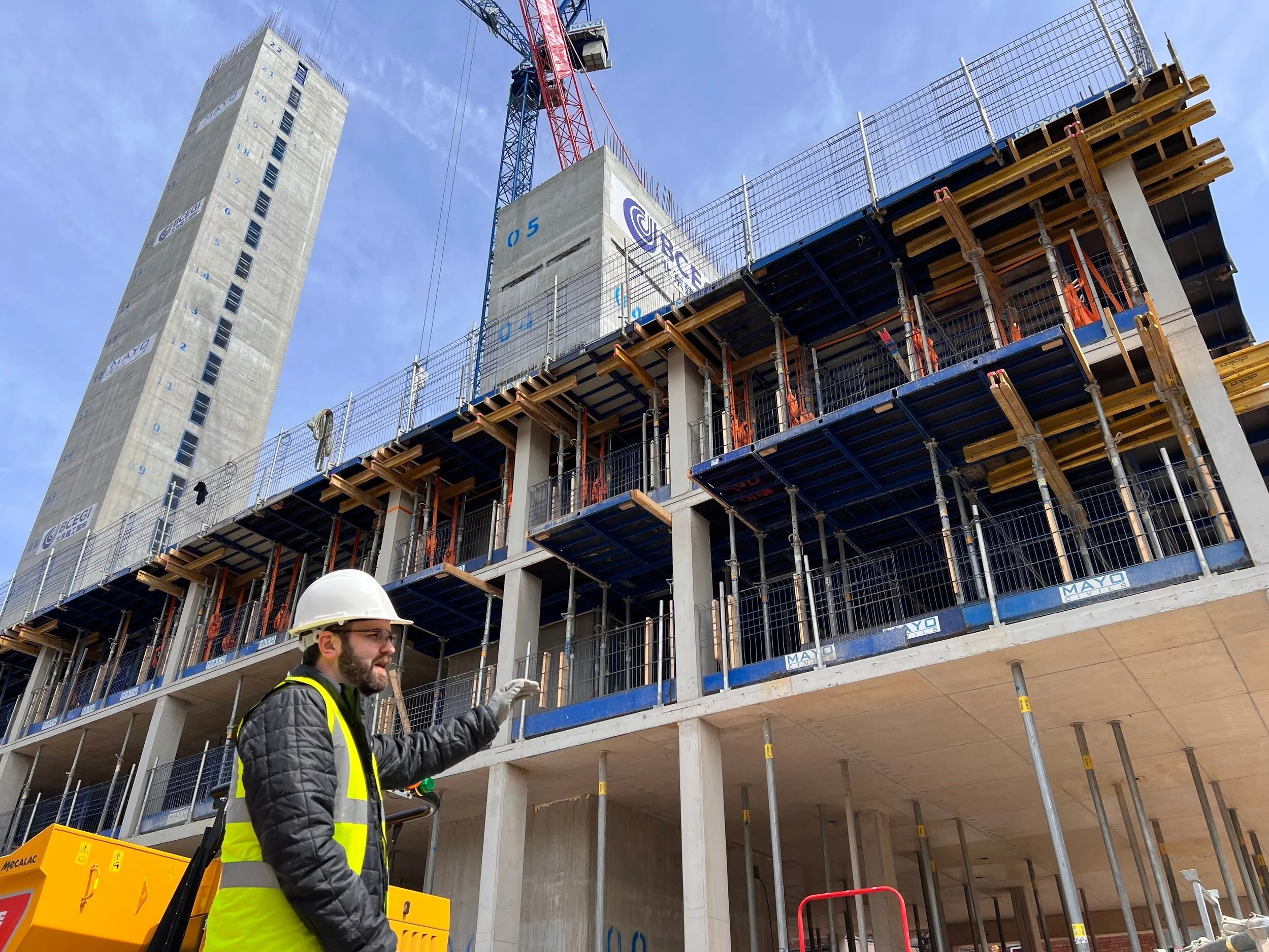
The development involves the demolition of existing properties and the erection of a multi storey building comprising of 272 no. one, two and three bedroom apartments along with ground floor commercial space.
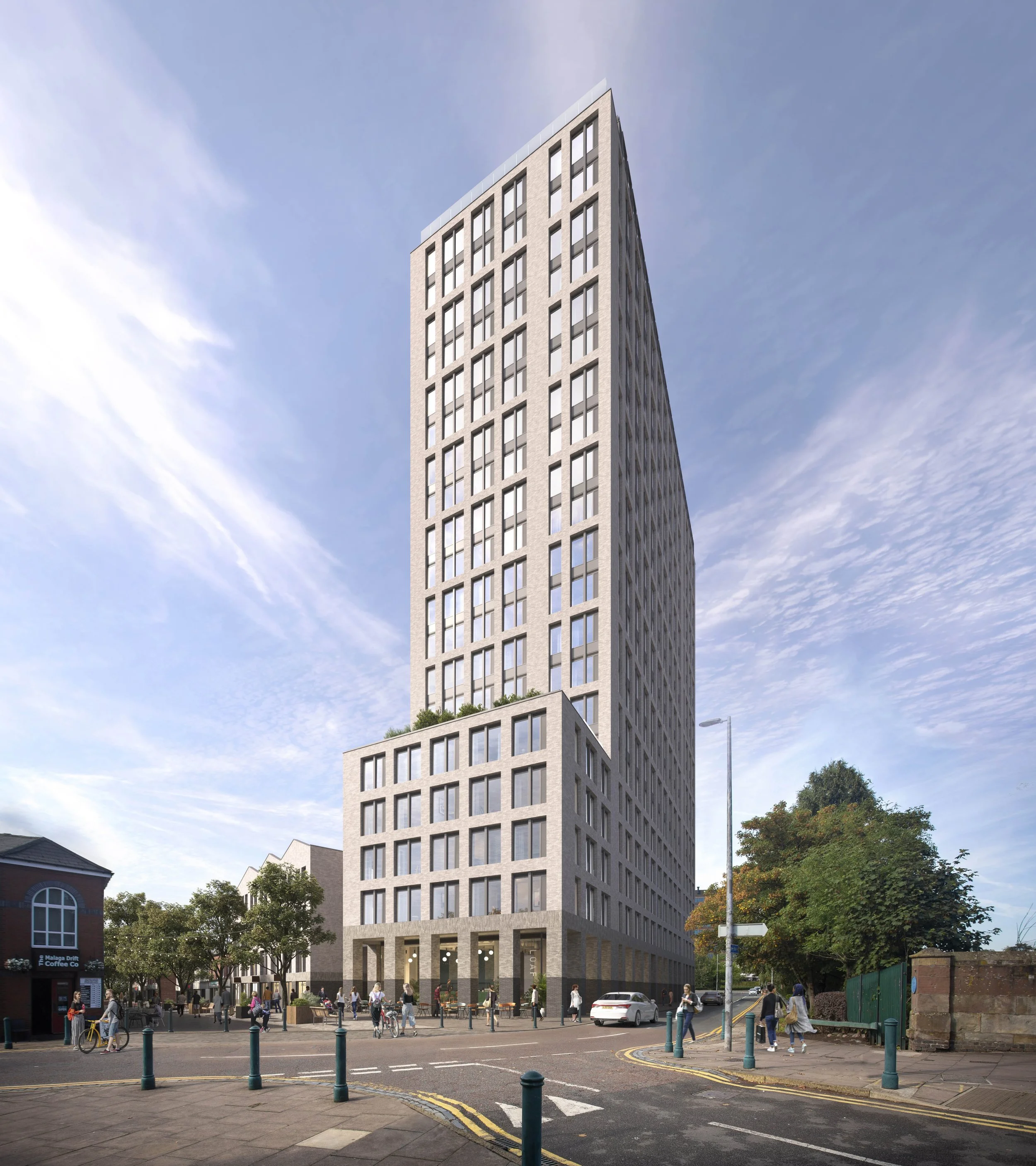
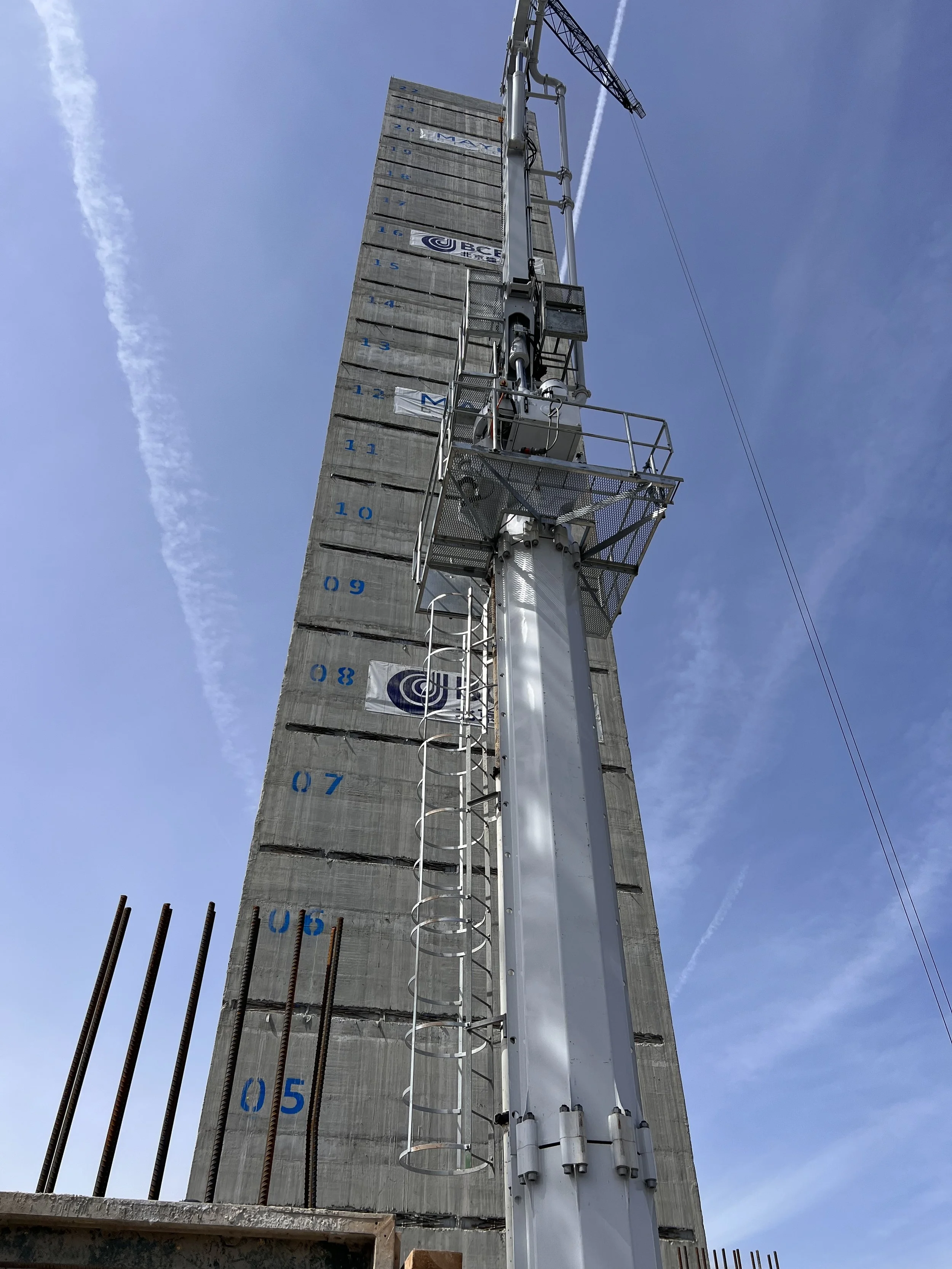
The accommodation takes the form of a ground plus 3 / 4 / 5 storey podium and a tower of ground plus 22 storeys. The podium is three-sided and addresses Church Street, Vicarage Grove and Birkdale Grove. One of the key challenges of the project is how to articulate a meaningful proposal that deals not only with the past and present of the area but also with the immediate future; a proposition that will completely transform the nature of Eccles. This new development will have to mediate between the existing context and issues that will be addressed by the emerging masterplan.
Bearing in mind that one of the key aspects of a tall building is how it addresses the ground condition.
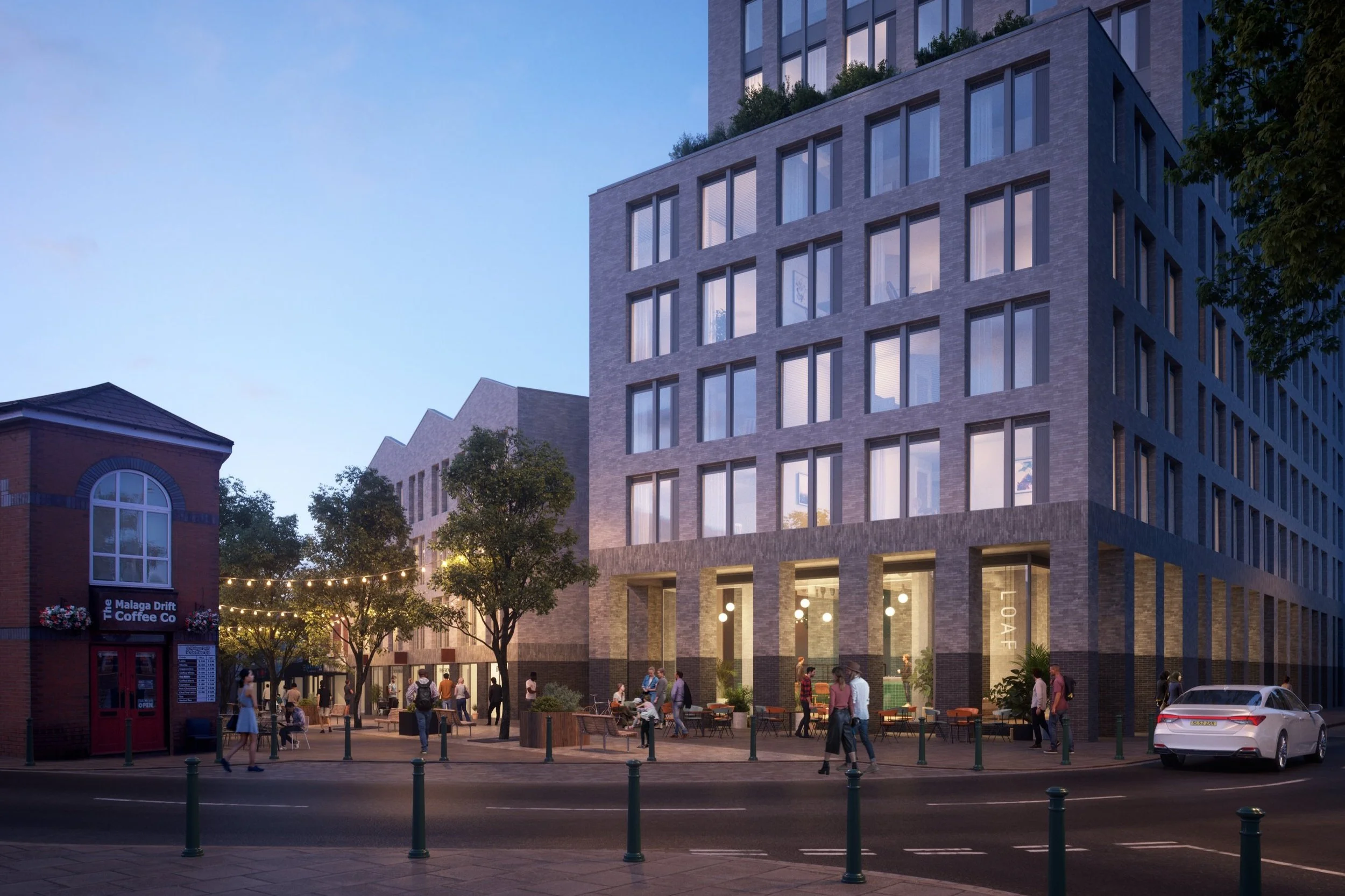
The building is joined to the ground by a more or less continuous two-storey colonnade and this approach defines the edges of the site to which they relate; this also helps to offset any potential perception of this building as an island object.
The architectural character and language of the new building is drawn from relevant and important local history; textile warehouses, coal mining and engineering. By drawing on the warehouse typology, interpreted into a modern architectural language, the new building through its scale, layered façade and detailing will contribute positively to the local and wider context. An external language of brick, masonry and metalwork with deep set window reveals reflects a more robust, ‘converted industrial’ aesthetic.
The elevations are composed of a tripartite formation with a clearly defined base, middle and top. The base of the building is generally emphasised by a double or single height colonnade; the middle is characterised by the single or double order subdivision of the elevation, and the top of building is characterised by a set back, more visually lightweight materiality. This proportional treatment of the façade is a traditional hierarchy stemming from classical architecture.
The primary masonry elevation grid alludes to warehouse and weaving; this is further reinforced by a secondary window grid that appears interwoven within the masonry grid. The masonry grid “frays” at the base to form the colonnade and the window grid “frays” at the top to become the roofscape. The metal windows allude to engineering and foundries, as do forged metal gates that provides access into the resident’s courtyard. The base of the colonnade piers are formed from a dark grey-black masonry that alludes to coal emerging from beneath the ground.
The courtyard space within the building changes in character and is more domestic and almost mews-like incorporating hard and soft landscape, lush planting, amenity and play space.