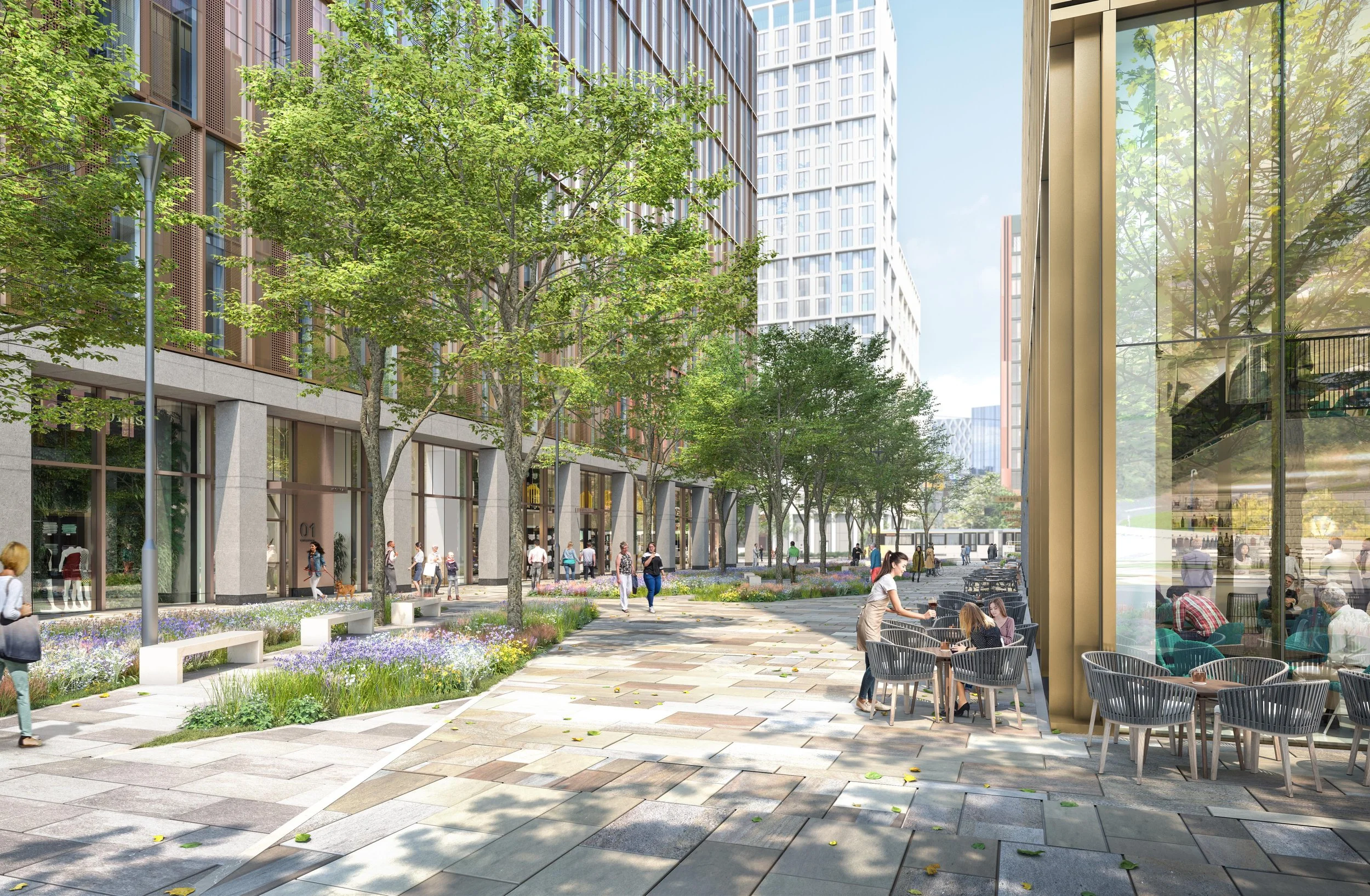
Residential Development at Michigan Avenue, MediaCityUK
X1 Developments
2019-2021
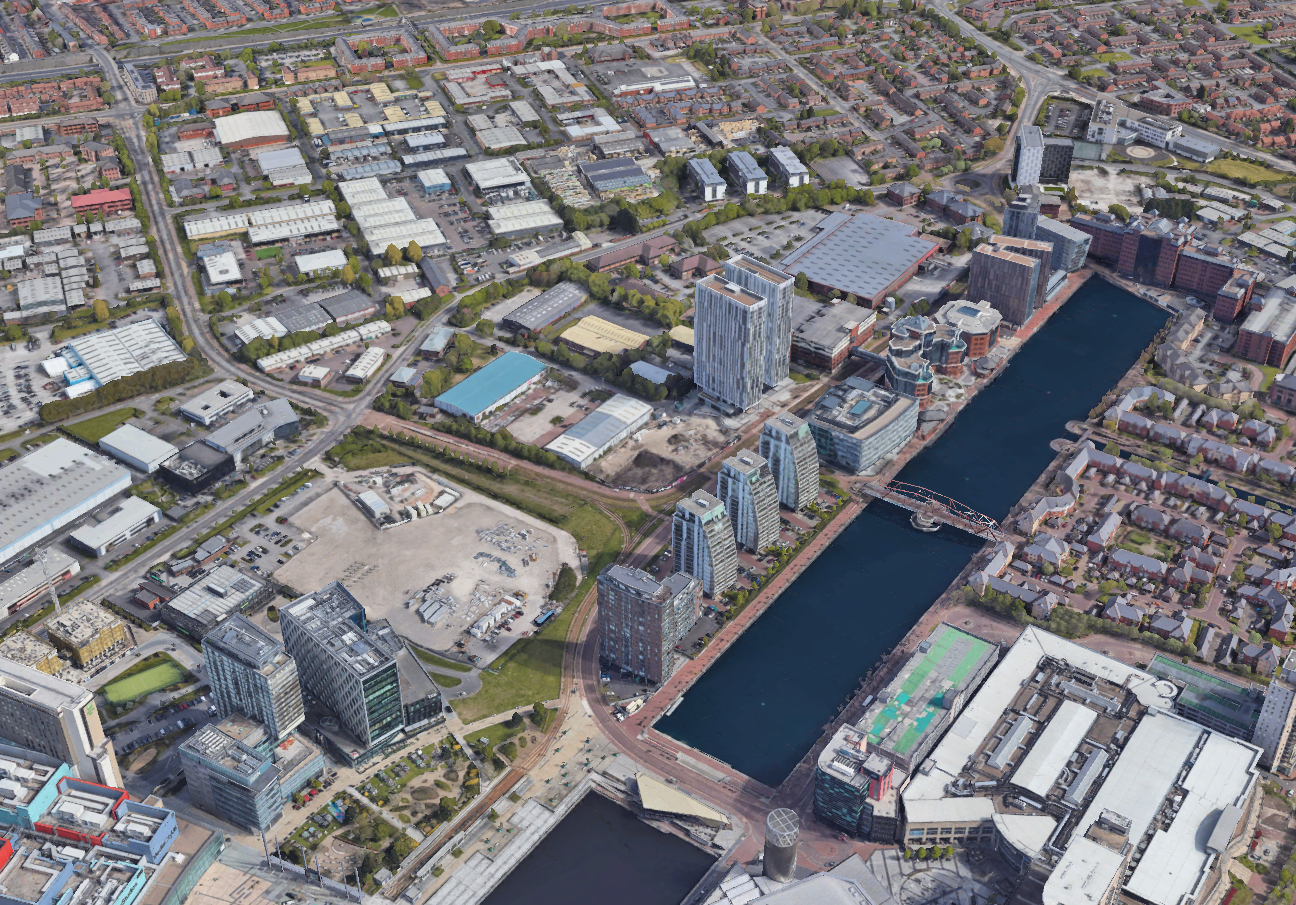
A Development Framework for the site to the immediate east of MediaCityUK designed by Jeffrey Bell + Co was the subject of an Outline Planning Application that established high-quality new development and supporting public realm, highways and other community infrastructure that would result in a safe, accessible, vibrant, distinctive and sustainable residential led neighbourhood where people would want to live. The consented Development Framework was used to inform more detailed design proposals on which a Reserved Matters Planning Application was based.
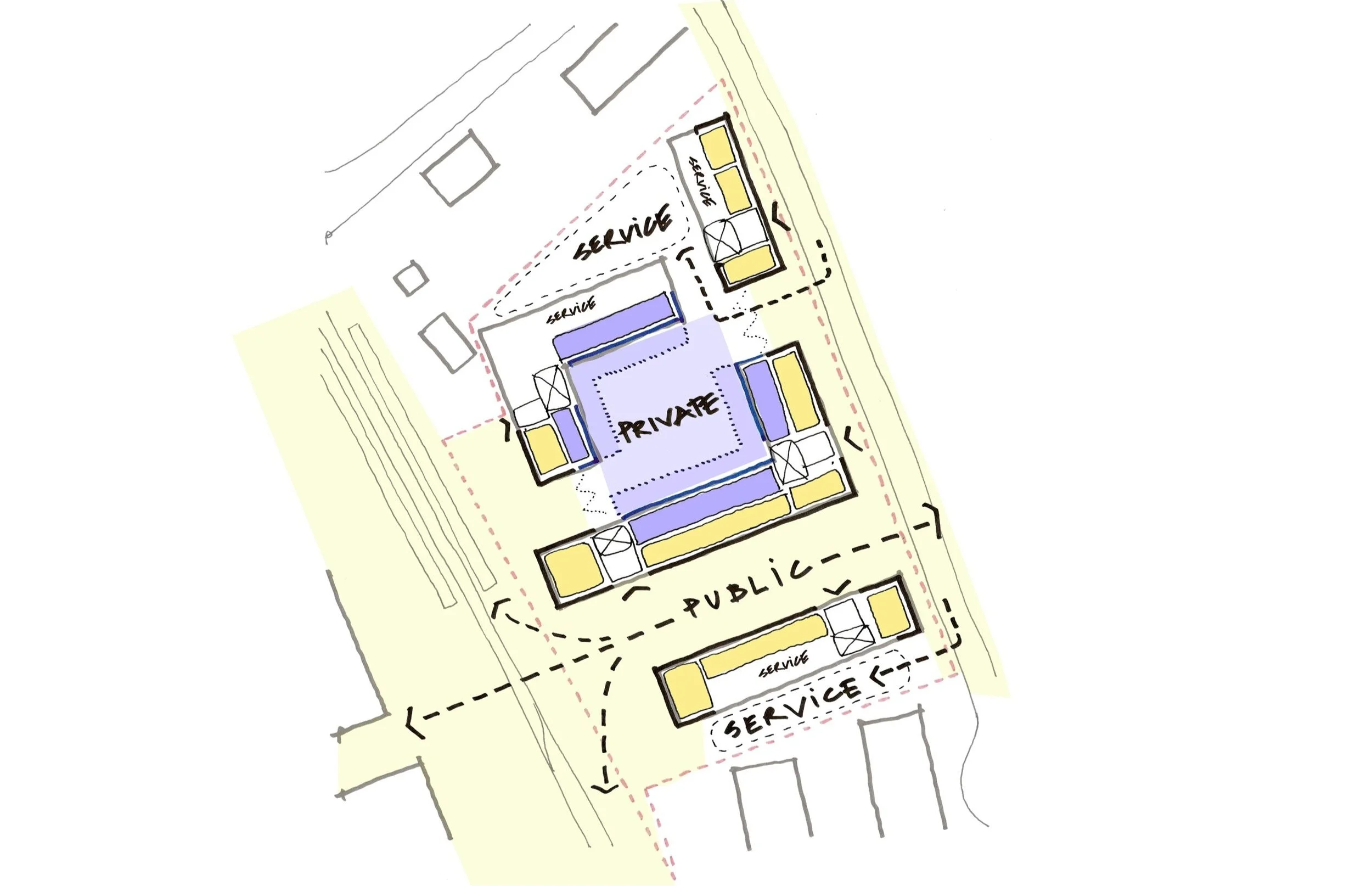
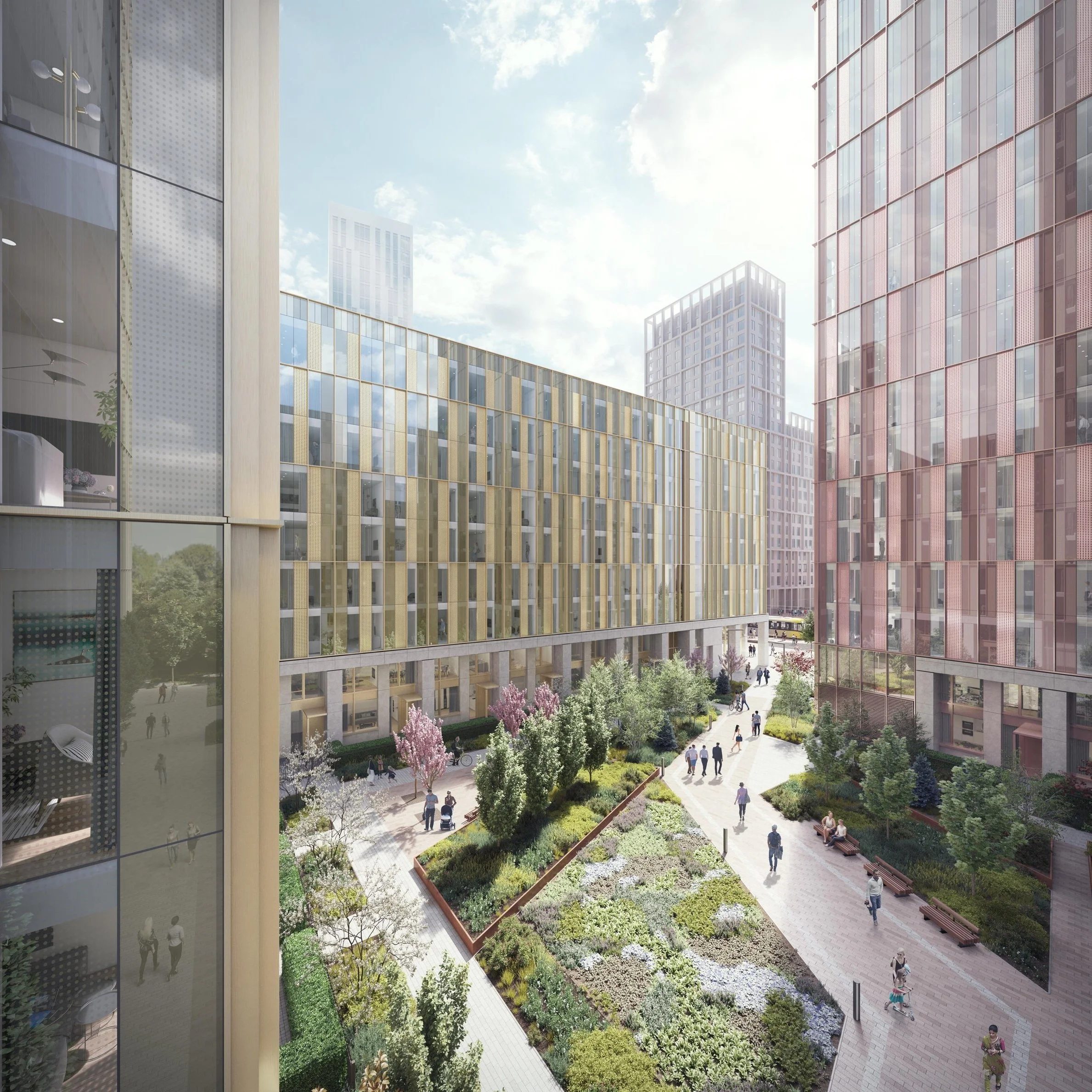
The Development Framework tackled challenges inherited from the past redevelopment of the area; it sought to significantly expand and humanise the public realm while improving connections. The redeveloped site would be characterised by new streets and public spaces with more direct and seamless connections to surrounding neighbourhoods. By employing straightforward urban design principles and re-establishing the urban grain, a new pedestrian-friendly, legible and permeable residential neighbourhood would be created with an identifiable character and a strong sense of place. The aim was to not only regenerate the physical environment, but to create a ‘Place’ where the community can look to the future with confidence, that will inspire and stimulate, and will support and protect its residents.
The brief was to provide circa 1300 residential apartments along with publicly accessible space at ground floor level.
The development was seen as a transition between two existing and diverse conditions; the present and future mixed-use MediaCityUK to the west and the low-level industrial sheds of the past to the east.
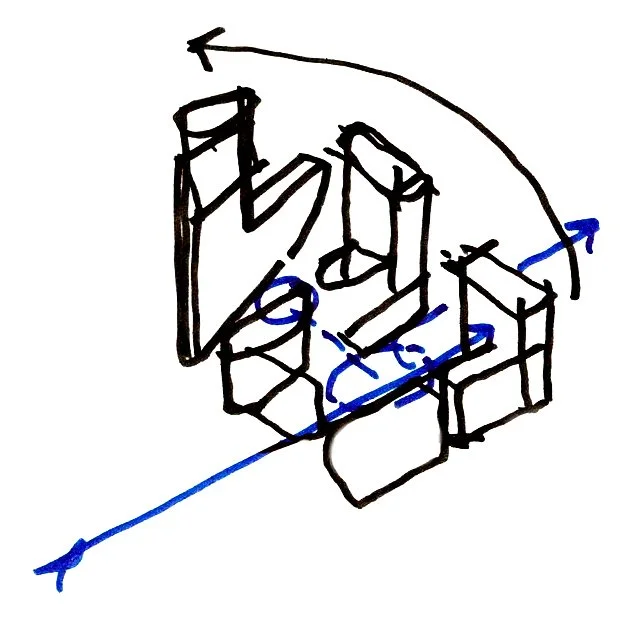
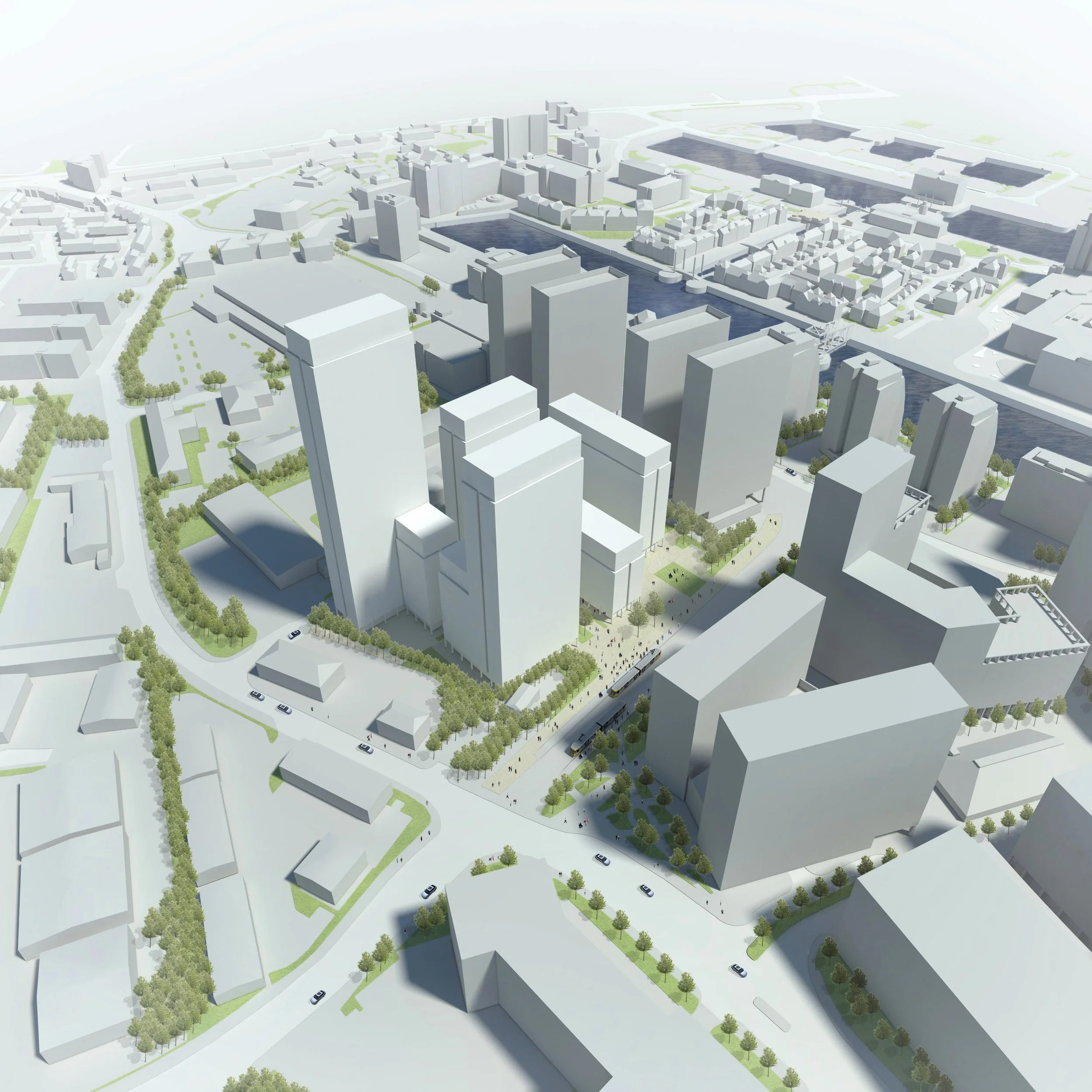
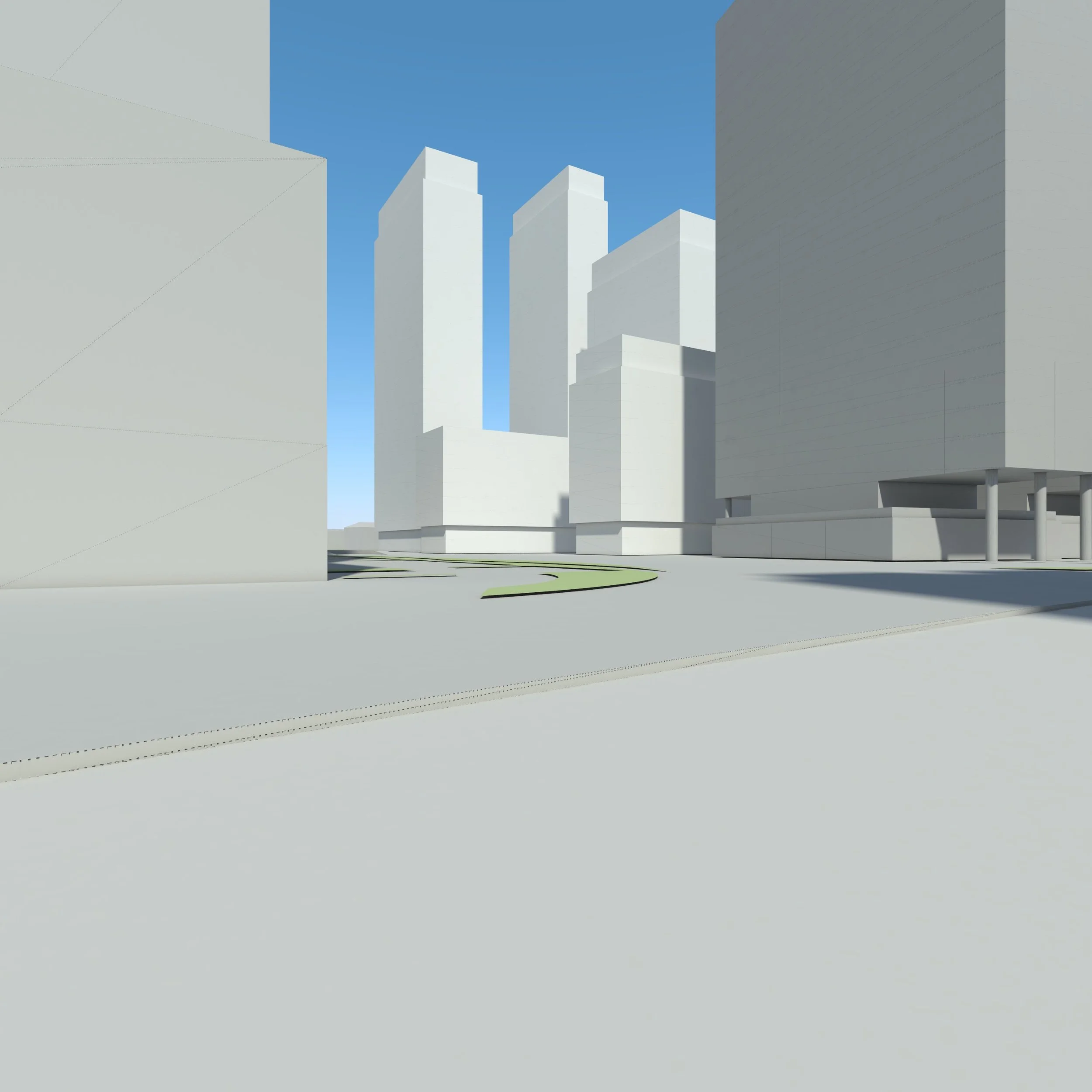
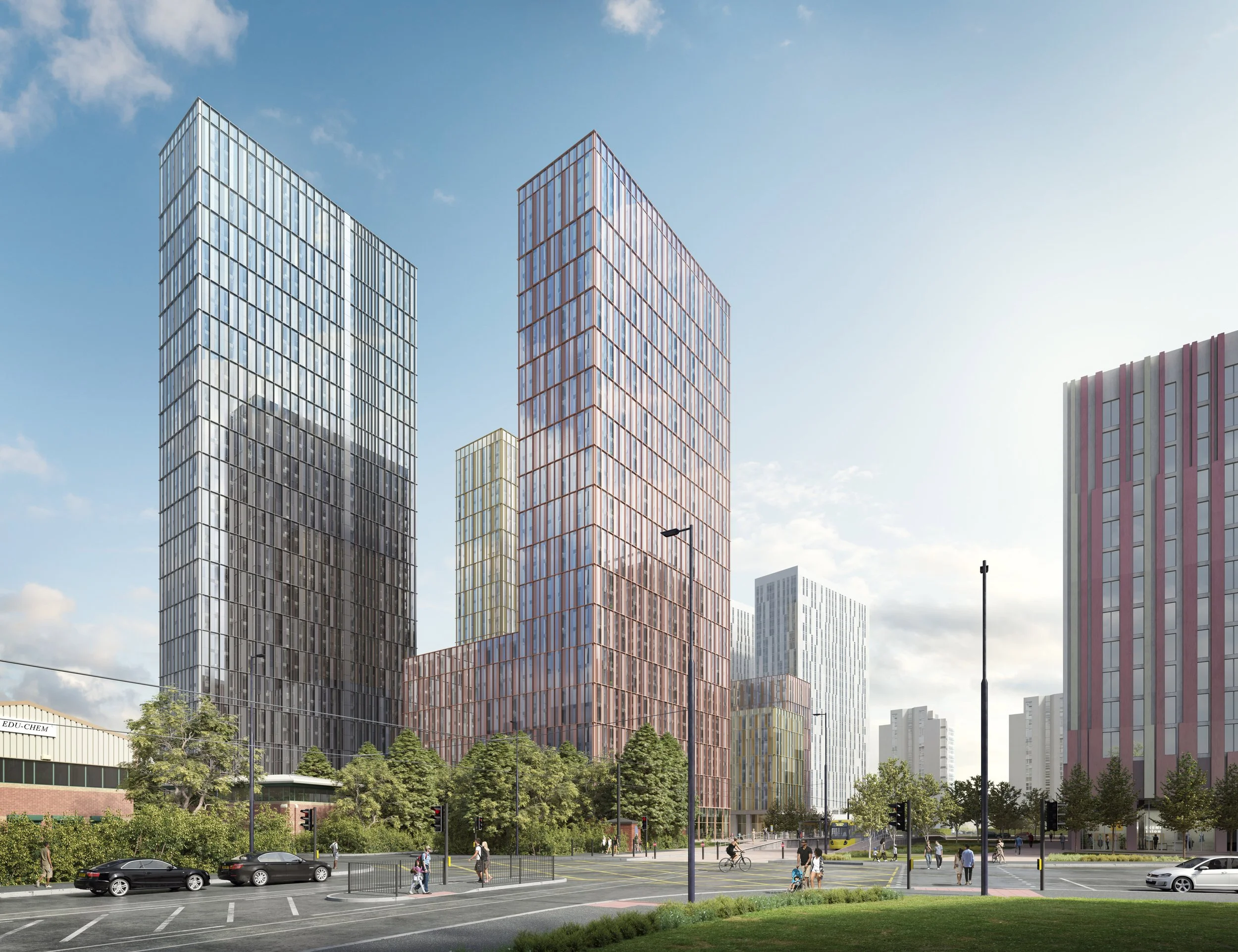
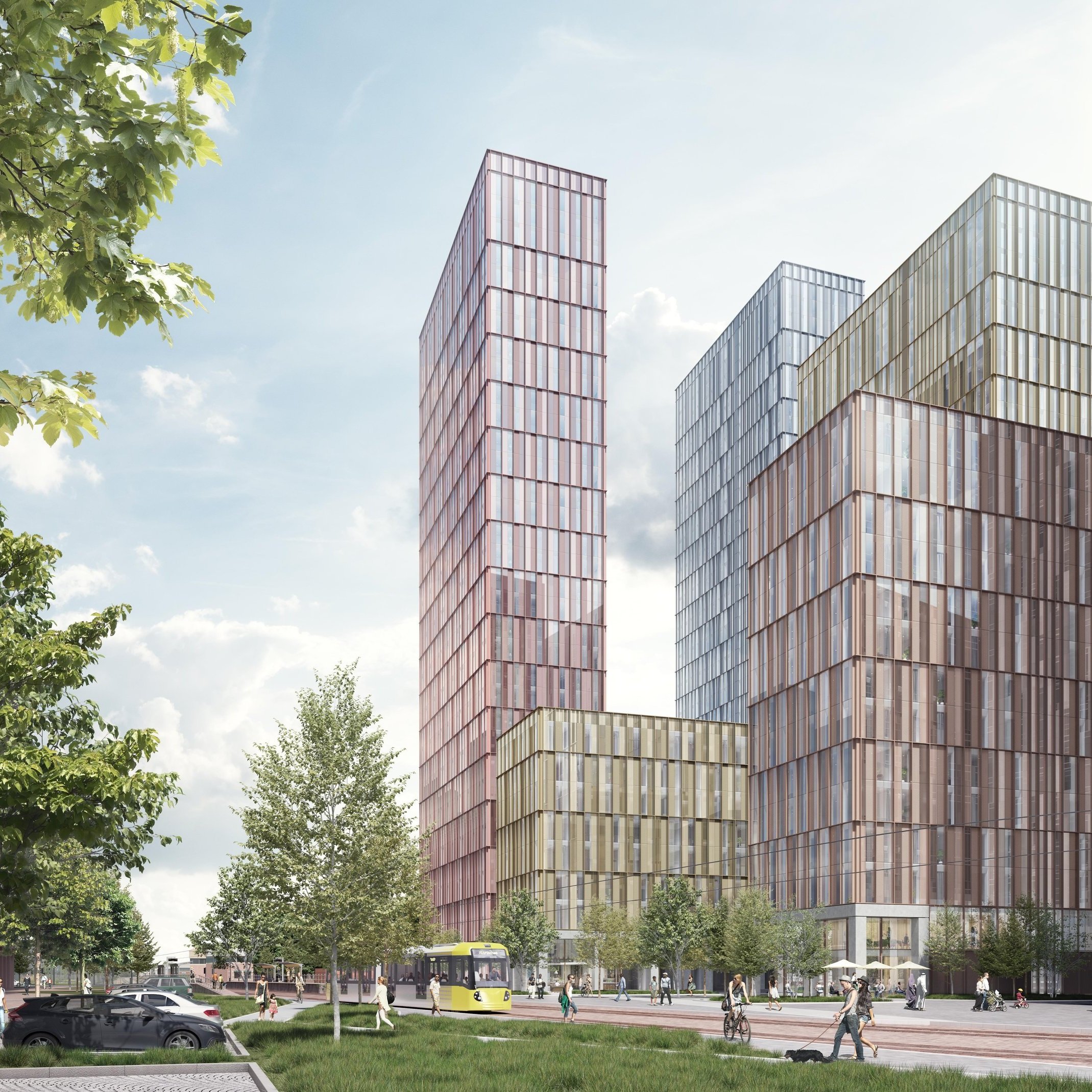
A massing proposal for a grouping of four buildings emerged that was based on low level plinths with a series of staggered towers, increasing sequentially in height from south to north. One of the key challenges of this project was how to articulate a meaningful proposal that deals not only with the past and present of the area but also with the immediate future and that would completely transform this part of Salford Quays. Ranging in height from 14 storeys, 31 storeys, 35 storeys with a 41 storey tower at the head of the cluster creates ab a landmark as Broadway sweeps around from west to east.
All four buildings are joined to the ground by an intermittent two storey colonnade which responds to the specific functionality of public access uses, building entrances and back of house facilities. The four buildings have been considered both together and individually; this has influenced the elevational treatment of podiums, towers and the intermediate scale building. The façade then takes the form of a ‘contemporary classic’ language that is ‘modern movement’ based and utilises a uniform treatment to each elevation. The elevations are generally composed of a tripartite formation with a clearly defined base, middle and top. The base of the buildings are generally emphasised by a double height colonnade; the middle is characterised a double order subdivision of primary framing elements of the elevation, and the top of building is characterised by a triple height order of primary framing elements. This proportional treatment of the façade is a traditional hierarchy stemming from classical architecture which is generally legible, understandable and attractive. The façades of all of the buildings feature the same unitised glazing system that comprises of a primary grid of coloured metal mullions and transoms within which are a limited number of glazed panels. Each panel is one of five distinct types that are arranged in a checkerboard pattern referencing the nature of the space contained behind.